DCELC
DC Early Learning Collaborative
ECE as a Public Good Campaign
Reframing Early Childhood Education as Essential to Washington, DC's Future
$7-$13
Return on every $1 invested in ECE
90%
Brain development before age 5
57%
DC students who are Black
19%
DC students who are Hispanic
Time to Recognize Early Education and Care as Part of the Public Good
In economics, a public good refers to a commodity or service that is provided without profit to all members of a society, either by the government or a private individual or organization.
The pandemic of 2020 has shined a bright light on the inequities that have long existed in this country. Most pointedly, the disparities in access to health care and educational opportunities that lead to economic prosperity were laid bare. As we begin to defeat the corona virus and return to work, the critical role that the availability of quality child care will play in our country's return to work cannot be overstated. As such, early education and care must be recognized as a public good.
Although historically the importance of early learning during child care has been overlooked, recently its importance has been heralded, particularly here in the District of Columbia. Similar to traditional public schools and public charter schools, Early Care and Education must be viewed as a part of the public good.
Since the Massachusetts Bay Colony General School Act of 1647, it has been widely agreed and accepted that public education is a part of the public good. It contributes to the overall cohesion and coherence of a community's moral fiber by enabling all of its children to reach their full potential.
Public education has long been recognized as the gateway to opportunity for children from a variety of racial/ethnic and socio-economic backgrounds. Early advocates of public education contended that only through public funding could we provide the consistent support needed to educate all children and bring a more standard approach to curriculum, length of school year, teacher qualifications and teacher compensation.
$14 Return on Investment
For every dollar invested in early education and care, economic models project a fourteen dollar return.
60%+ of Workforce
Much has changed since 1647, including women making up over 60% of the workforce, requiring quality child care.
Foundation for Success
Early education and care is universally recognized as the foundation for the educational continuum that leads to success in school and life.
The District of Columbia Context
Currently in the District, early education and care programs and services are being provided by Community Based Organizations (CBO), traditional public schools and public charter schools—all of which fall under the auspices of the Office of the State Superintendent of Education (OSSE).
The Council of the District of Columbia's passage of the Pre-K Expansion and Enhancement Act of 2008 sought to address the disparities that existed in school-based and community-based pre-k programs serving 3 and 4 year olds. It recognized pre-k as a public good regardless of organizational auspices and provided a marker for equal pay for equal work and equal qualifications.
In view of the fact that early education and care serve as the initial building blocks of a child's educational and economic trajectory, now is the time to recognize it as a critical part of the public good and use the same public dollars that support K-12 education to support Pre-K and Birth-to-3 education regardless of setting.
Carrie Thornhill
President, DC Early Learning Collaborative
DCELC will conduct citywide communications and awareness campaigns designed to shape how families, business leaders, and policymakers understand and value early learning. These campaigns will be designed to go beyond messaging—they are strategic efforts to reframe early childhood education as an essential public good and a cornerstone of the District's social and economic well-being.
Our Strategic Approach
Through storytelling, data-driven narratives, and culturally responsive outreach, DCELC highlights the impact of high-quality early education on children's development, family stability, and community prosperity. By uplifting the voices of educators, parents, and early learning advocates, DCELC creates compelling narratives that inspire public investment, influence policy decisions, and mobilize collective action in support of young children and the workforce that serves them.
Standing Up for Early Education
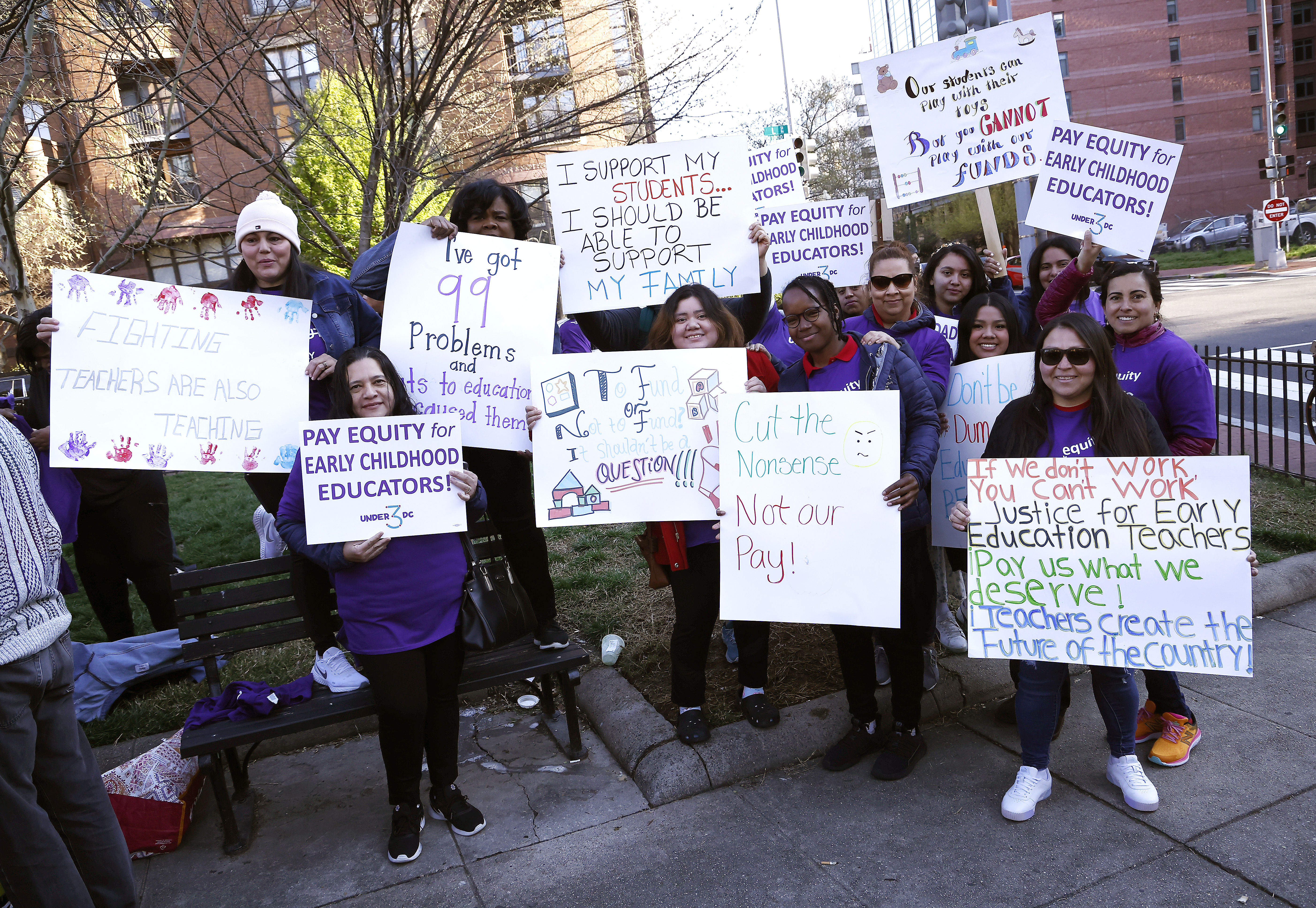
DCELC mobilizes educators, families, and community members to advocate for equitable funding and recognition of early childhood education.
Pay Equity for Educators
Advocating for fair compensation that recognizes the essential work of early childhood educators.
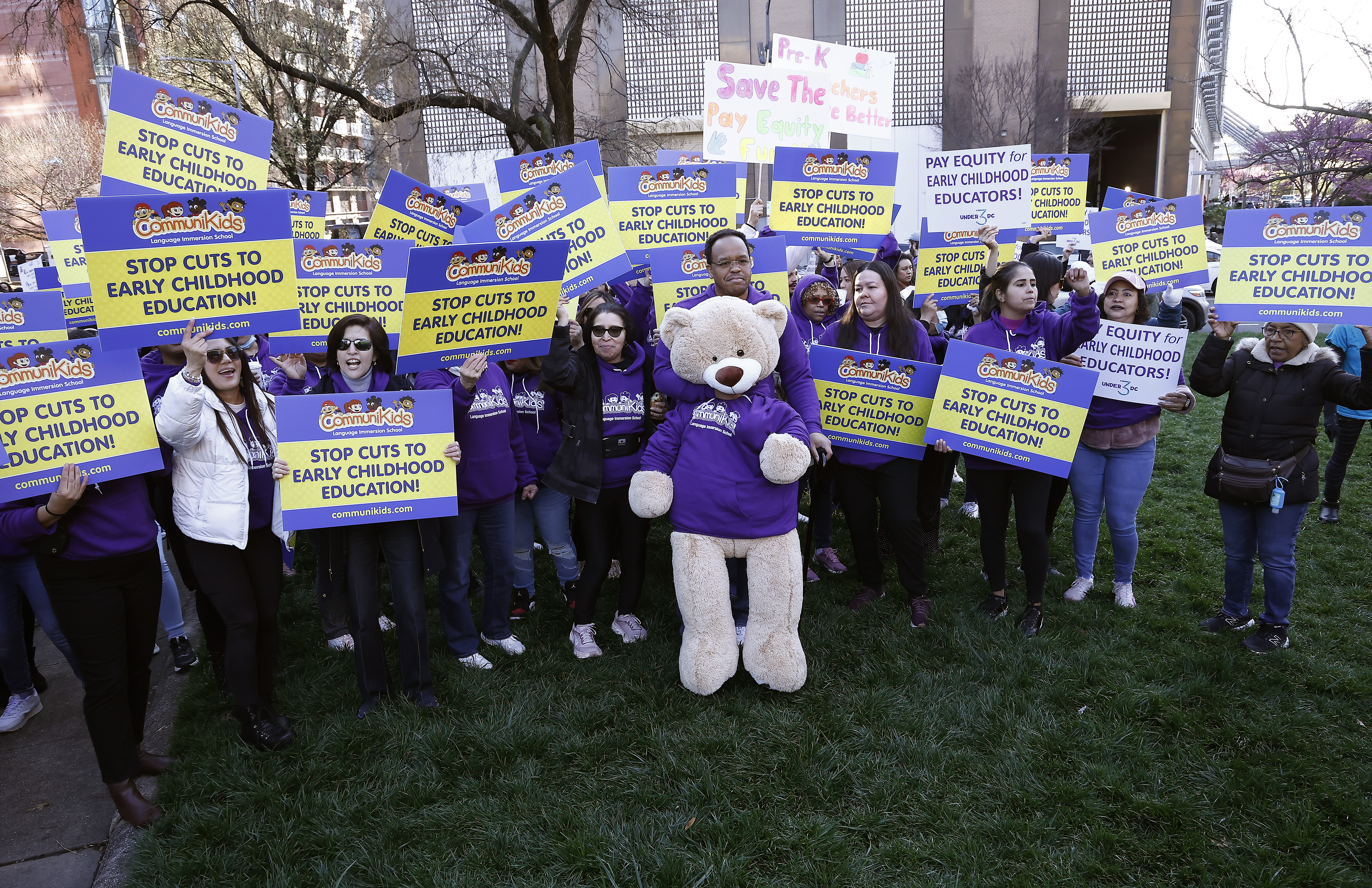
Protecting ECE Funding
Community members unite to prevent cuts to early childhood education programs that families depend on.
Why ECE as a Public Good Matters
Economic Driver
Every $1 invested in quality early childhood education returns $7-$13 to the economy through increased productivity, reduced social costs, and higher lifetime earnings.
Workforce Enabler
Reliable, high-quality childcare enables parents—especially mothers—to participate fully in the workforce, driving economic growth and family stability.
Foundation for Success
90% of brain development occurs before age 5. Quality early education sets children on a trajectory for academic achievement and lifelong success.
Equity Imperative
Access to quality ECE helps close opportunity gaps, ensuring every child regardless of zip code has the chance to thrive.
Campaign Pillars
DCELC leverages diverse media platforms to ensure broad and inclusive engagement across the District.
Public Messaging
Frame ECE as not just a childcare solution but a driver of economic growth, workforce participation, and long-term child wellbeing.
Media Strategy
Partner with local and regional press, amplify stories of ECE providers, and highlight the impact of adequate funding.
Digital Engagement
Leverage social media, newsletters, and web platforms to educate diverse audiences on ECE's role in community prosperity.
Business & Economic Case
Produce fact sheets, infographics, and policy briefs showcasing the return on investment (ROI) of ECE for DC's economy.
Public Will Building Events
Host town halls, advocacy days on Capitol Hill/at the DC Council, and ECE awareness fairs.
Storytelling Campaigns
Elevate personal narratives from families, educators, and community providers to humanize policy debates and broaden public empathy.
Research & Evidence
Our advocacy is grounded in decades of research demonstrating the transformative impact of early childhood education.
Nobel Prize Research
James Heckman's groundbreaking ECE studies
Nobel Prize-winning economist James Heckman's research demonstrates that high-quality early childhood programs for disadvantaged children can deliver a 13% annual return on investment.
The National Institute for Early Education Research (NIEER) finds that children who attend quality pre-K programs score higher on measures of cognitive and social-emotional development.
According to the Economic Policy Institute, the childcare industry supports approximately 3.5 million jobs nationally and contributes $99 billion annually to the U.S. economy.
Research from the Center on the Developing Child at Harvard University shows that early experiences literally shape brain architecture, establishing either strong or weak foundations for future learning and health.
Join the Movement
The future of Washington, DC depends on how we invest in our youngest residents today. Join DCELC in advocating for early childhood education as a fundamental public good—essential to our children, our families, our economy, and our community.
